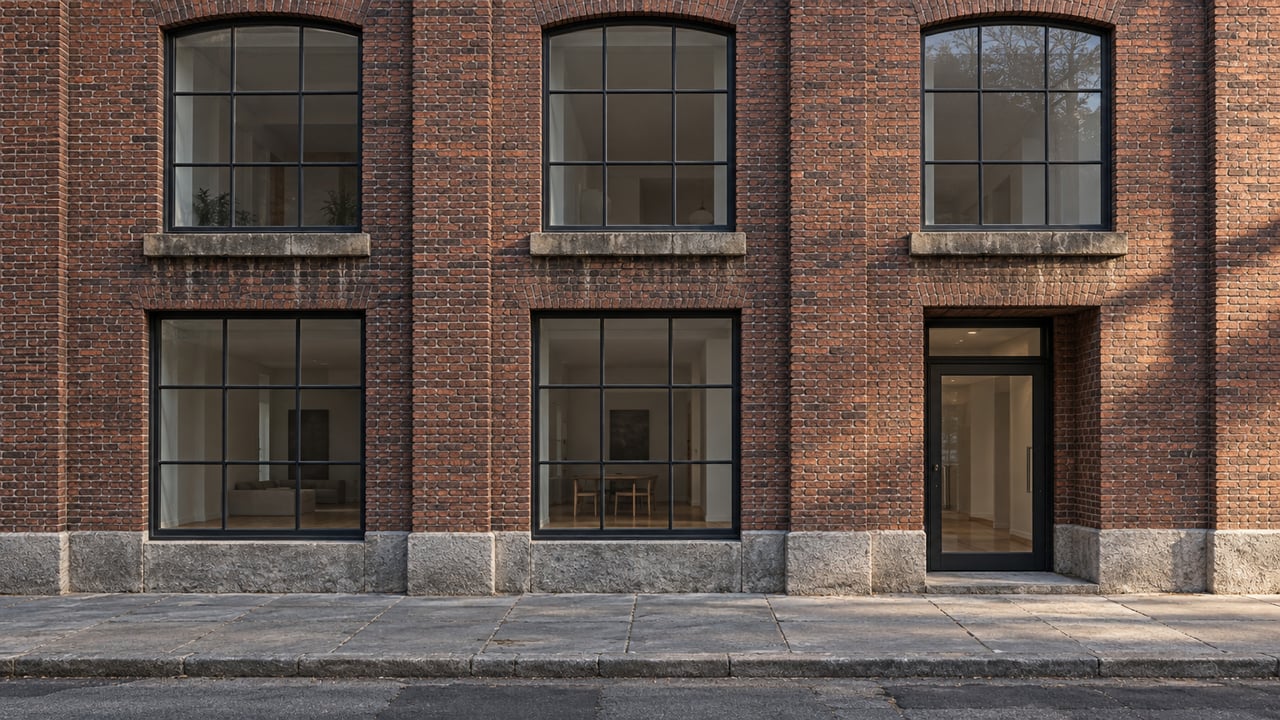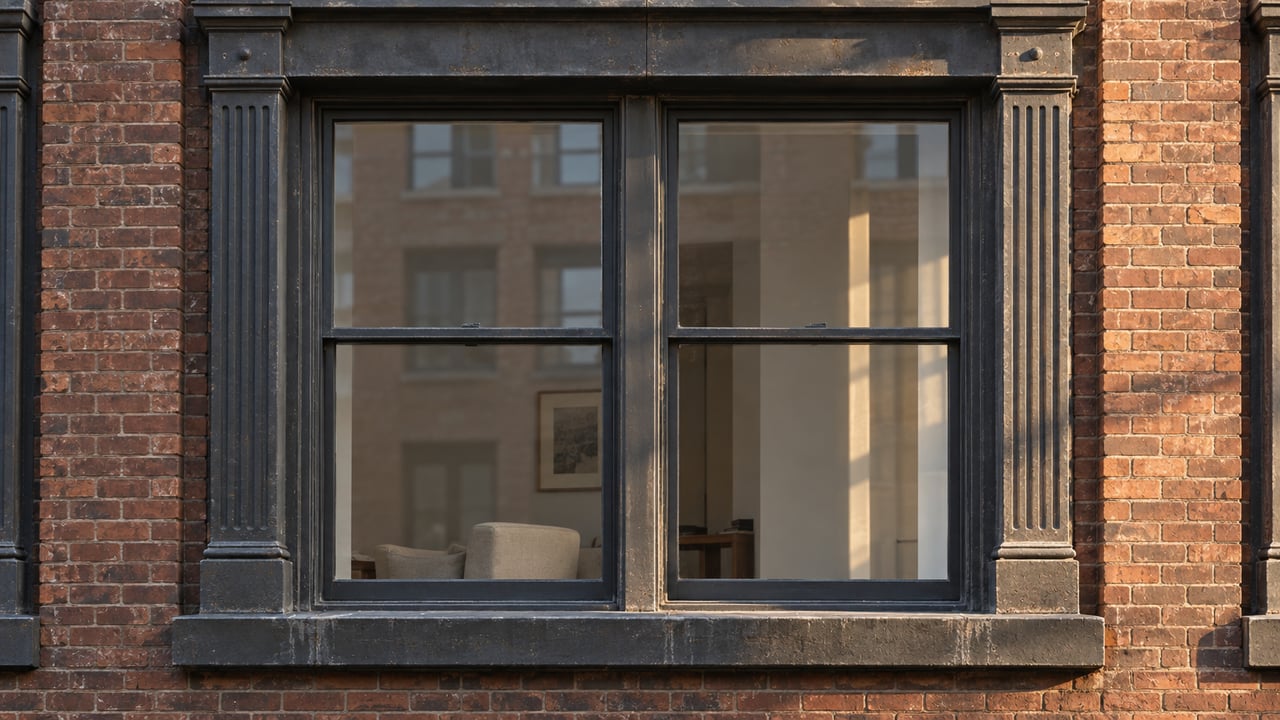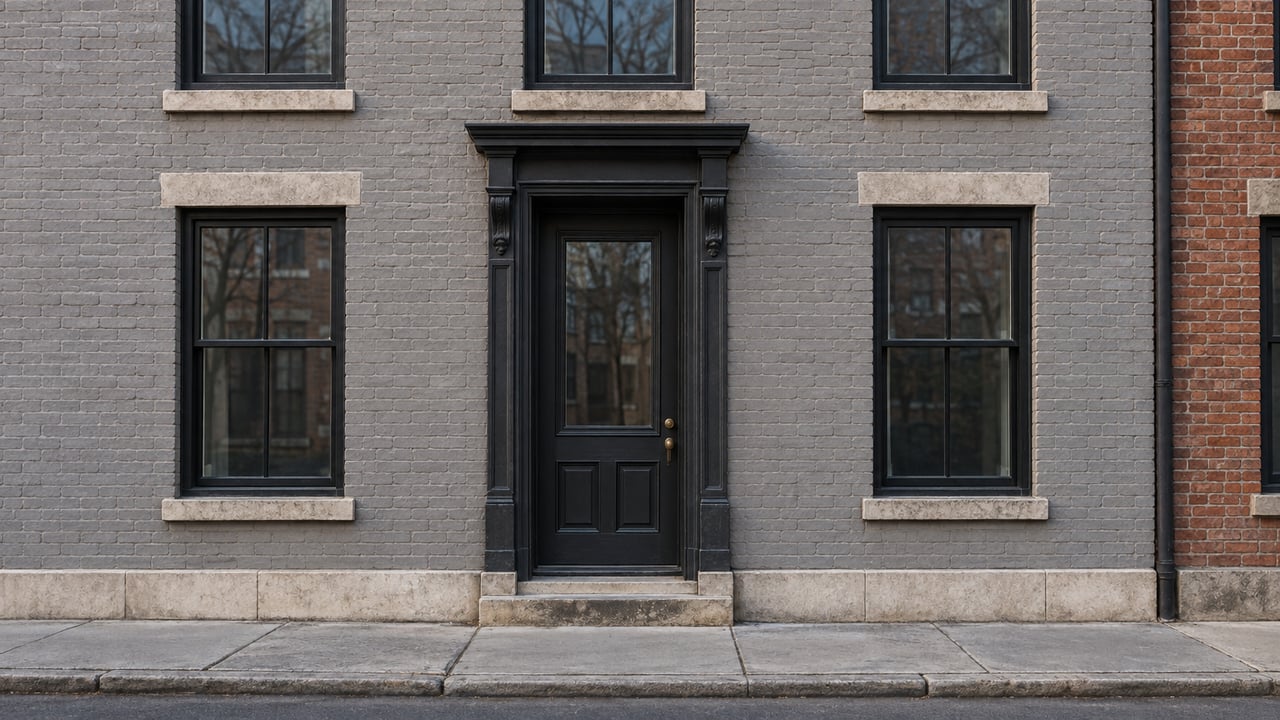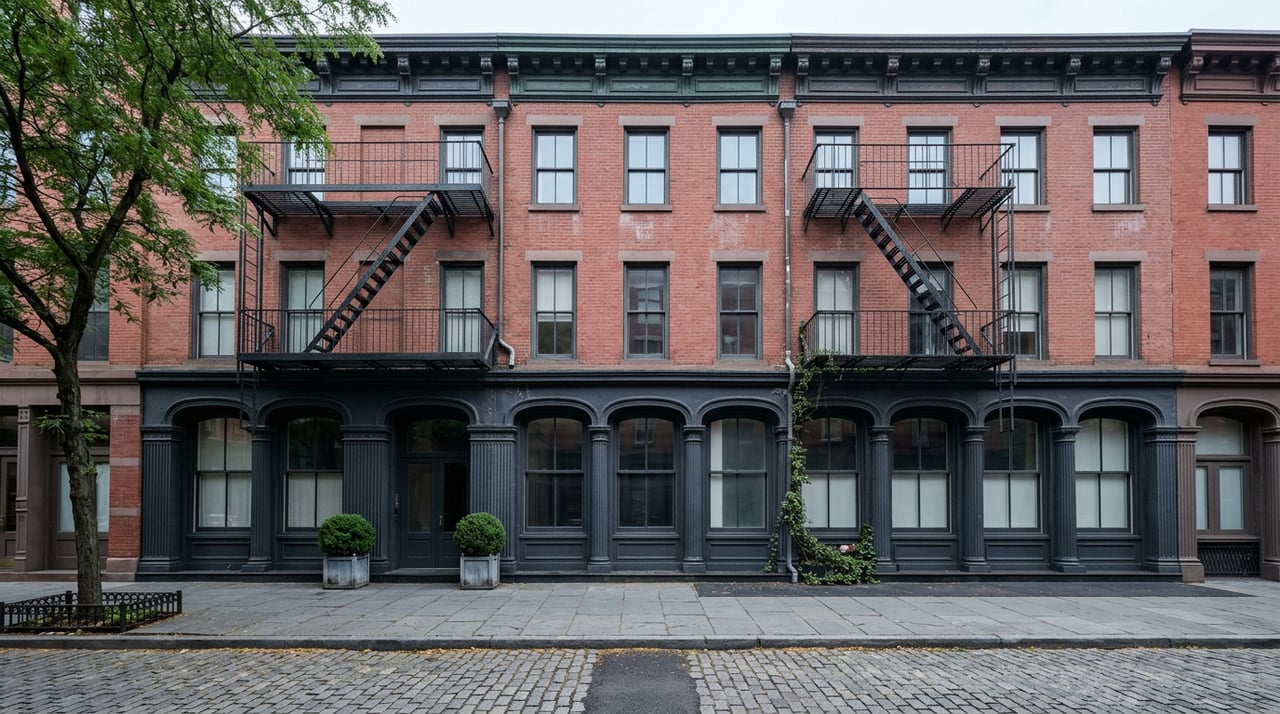
On August 18, 2026, the Landmarks Preservation Commission held a public hearing for a building at 233 Mott Street. Six stories, five condominium units, ground-floor retail, a rear garden and private balconies, designed by Michael Zenreich Architect PC for developer King's Capital. Nothing about the design was controversial. The procedural context was that the lot itself sits outside any historic district. It only landed in front of the commission because it had been subdivided from a landmarked parcel next door, a technicality that put Landmarks in charge of a site one commenter on New York YIMBY argued the board had no real business reviewing at all.
Five units. One rear garden. Months of review over a cornice detail. That is one example of the review process for proposed housing in Nolita.
Four blocks away, on the Bowery, Kinsmen Property Group had just filed a land use application for a 322-home, three-tower project at 156-166 Bowery, a site that has sat behind demolition fencing for years. One building would rise 29 stories and hold 124 affordable apartments set aside entirely for seniors. The other two, each 26 stories, would add roughly 99 mixed-income homes apiece. The design team includes Kohn Pedersen Fox and Beyer Blinder Belle, and as of this writing the application had not yet formally entered the city's Uniform Land Use Review Procedure, though it was expected to before the end of the year.
Same neighborhood. Same summer. Two projects at different stages of review. A city agreement concerning the garden designated the Bowery site for housing.
The Garden Agreement and Planned Housing Sites
For roughly a decade, the city had a plan for Elizabeth Street Garden, the one-acre sculpture garden between Prince and Spring Streets that Joseph Reiver's nonprofit has run since his father Allan Reiver first opened it to the public in 2005. The plan, known as Haven Green, would have replaced the garden with 123 units of affordable senior housing. The nonprofit fought it through years of litigation and community organizing.
In June 2025, Mayor Eric Adams reversed course. In an agreement with Council Member Christopher Marte, the city permanently paused redevelopment of the garden and committed instead to rezoning three other sites in Marte's district to deliver more than 620 affordable homes, over five times what Haven Green would have produced on its own, according to the mayor's office announcement. One of those three sites was 156-166 Bowery.
The politics kept moving after that. In November 2025, the Adams administration moved to designate the garden as dedicated parkland, which NY1 reported would require state legislative approval to undo. Zohran Mamdani had campaigned on evicting the garden to build the housing himself, but by August 2026 his administration confirmed it would not pursue that path, opting instead to build 180 affordable homes at a separate city-owned lot on Suffolk Street. The garden stays. The housing goes to the Bowery, and to Suffolk Street, and to a site in the Financial District.
For anyone comparing Nolita to a neighboring downtown market, that sequence matters more than any single price chart. The agreement designated one edge lot for housing; the historic core was not among the sites identified.
What the Premium Actually Buys
Neighborhood-level tracking as of May 2026 put average asking prices in Nolita around $3,211 per square foot, noticeably higher than SoHo at roughly $2,386, Greenwich Village at roughly $2,447, Little Italy at roughly $1,218, and the Lower East Side at roughly $1,298. Here is how that comparison lines up:
| Neighborhood | Avg. asking price per sq. ft. (May 2026) |
|---|---|
| Nolita | ~$3,211 |
| Greenwich Village | ~$2,447 |
| SoHo | ~$2,386 |
| Lower East Side | ~$1,298 |
| Little Italy | ~$1,218 |
Ask five different sources what Nolita's median sale price actually is and you will get five different answers, some under $2 million, some north of $3.5 million. That is not sloppy data. It is what happens when a market this small, a mix of prewar co-ops, walk-ups, and a handful of boutique condo conversions along Elizabeth, Mott, and the Bowery, gets measured with a sample size where one closing at 260 Bowery or one estate sale at a walk-up can swing the whole number. The instability in the median is itself evidence of the scarcity. A neighborhood with a deep, conventional development pipeline does not produce medians that jump by a million dollars depending on which month you check.
Why the Bowery Project Won't Touch That Number
It would be reasonable to assume that 322 new homes rising within Nolita's own boundaries should eventually take some pressure off prices in the core. It probably will not, and the reason is in the unit mix. Building A at 156-166 Bowery is entirely affordable senior housing. Buildings B and C are described as mixed-income, which in New York City land use practice means income-restricted bands layered with some market-rate units, not an open condominium offering competing for the same buyer pool as a loft on Elizabeth Street. None of it will hit the resale market the way a comparable tower would in a neighborhood without an affordable housing mandate attached to its last big parcel.
Meanwhile, the mechanism that keeps the historic core scarce has not changed at all. The NoLita Historic District, designated by Landmarks in 2013, still governs exterior work on nearly every block west of the Bowery. The 233 Mott Street hearing is a reminder that even a lot technically outside the district can get pulled into that review if it was ever subdivided from landmarked land. For a buyer or investor thinking about a fixer-upper, a ground-floor retail conversion, or any project that touches a facade, that is the friction to plan around.
The practical read for anyone comparing Nolita to a neighborhood like the Lower East Side, where Essex Crossing and other large-scale projects have added real market-rate inventory over the past several years, is that Nolita's planned construction follows a different pattern. Its next wave of new construction includes income-restricted housing at its edge, while the historic core remains subject to the existing constraints described above.
A Few Questions Worth Asking Before You Compare Neighborhoods
Will the 156-166 Bowery project add market-rate condo inventory to Nolita? Not directly. The project's 322 homes are structured as affordable senior housing in one tower and mixed-income housing in the other two, which typically means income-restricted units rather than an open condominium offering.
Does the Elizabeth Street Garden deal change anything inside the Nolita Historic District itself? No. The agreement affects capacity at 156-166 Bowery and two sites outside Nolita entirely. Landmarks review inside the historic district, the process that shaped the 233 Mott Street hearing, continues under the same 2013 designation.
Why do published median prices for Nolita vary so much between sources? The transaction volume is small enough that individual sales, particularly a single condo conversion or estate sale, can shift the reported median significantly from one reporting period to the next. Treat any single median figure as a snapshot, not a settled number.
The Takeaway for Anyone Comparing Nolita to Its Neighbors
Nolita's limited new-construction pipeline reflects its small blocks and historic buildings, as well as the locations selected for housing under the garden agreement. Although that agreement concerned the garden, it also shapes where planned housing is located. If you are weighing Nolita against SoHo, the Lower East Side, or Tribeca, the question worth asking is not what the median sale price says this month. It is where each neighborhood's next unit of supply is actually going to appear, and who gets to buy it.
If you are trying to work out what that means for a specific building, a specific block, or a specific timeline, that is a conversation worth having directly. Jessica Markowski works this market from inside the Bogard New York team at SERHANT., and schedule a private consultation is the fastest way to get a straight answer on what Nolita's current supply picture means for your search.
This article is general information, not legal, tax or financial advice. Consult a qualified professional about your situation.